
Lexus LFA swaps howling atmo V10 for whip-crack EV powertrain in second generation
Lexus is developing an EV version of Toyota’s GR GT supercar, and it’s got big, V10-powered shoes to fill
Lexus has reprised the name of the legendary LFA for an electric supercar based on Toyota’s new V8-engined GR GT.
Toyota’s luxury brand revealed its vision of a future BEV super-GT last year at the Pebble Beach show in California and has now confirmed it will take its screaming V10 predecessor’s hallowed nameplate because “the model name LFA is not bound to vehicles powered by internal combustion engines”.
The electric LFA – still described as a concept for now – is being developed alongside the Toyota GR GT, which has been revealed today as a 641bhp, V8-powered super-GT in the vein of the Mercedes-AMG GT and Aston Martin Vantage and is due on sale in 2027.
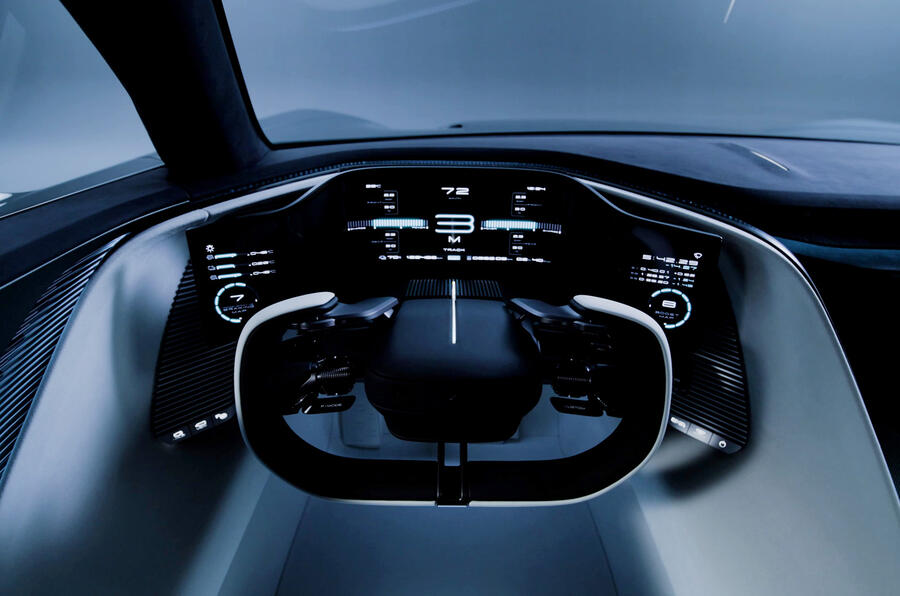
The LFA will share that car’s aluminium-intensive innards but benefit from the packaging freedom afforded by an EV powertrain and will be marked out by a totally bespoke exterior design and a futuristic, minimalist cockpit that majors on digital functionality and driver engagement.
The race car-style steering ‘yoke’ suggests the LFA will use the same steer-by-wire technology Lexus has recently introduced to the RZ.
Lexus said its ambition is to create “a BEV sports car that exceeds its customers’ expectations” and to “enhance the sense of unity between car and driver to deliver unprecedented driving pleasure”.
At 4.7m long and 2m wide, the electric LFA has a similar footprint to the Aston Martin DB12 and Bentley Continental GT, but at just under 1.2m tall, it is considerably shorter, suggesting that Lexus has opted not to place the batteries under the floor, as is conventional in EVs.
No further specifications of the two-seater have been revealed, and unlike the V8-powered car, nor has a targeted launch date. But Toyota has suggested it plans to deploy its first solid-state battery in a “high-power” EV in around two years – and the Lexus LFA is a likely candidate.
Recently, Toyota carbon-neutral engineering boss Keiji Kaita told Autocar that the company still considered that solid-state batteries (SSBs) would be “very important in the future” and it was “sticking to the schedule” to put one in a production car in 2027 or 2028.
The company said SSBs can produce double the power of current-generation EV batteries, triple the range and take up far less space – which makes them particularly well suited for tightly packaged high-performance models.
“For the all-solid-state battery, the characteristic is high power, compact and long range,” said Kaita. “The cars will leverage these attributes.”
Launching the technology in an expensive, low-volume range-topper like the LFA would also help Toyota to offset some of the cost of development before it rolls the technology out to more mainstream models in the line-up.
Source: Autocar
